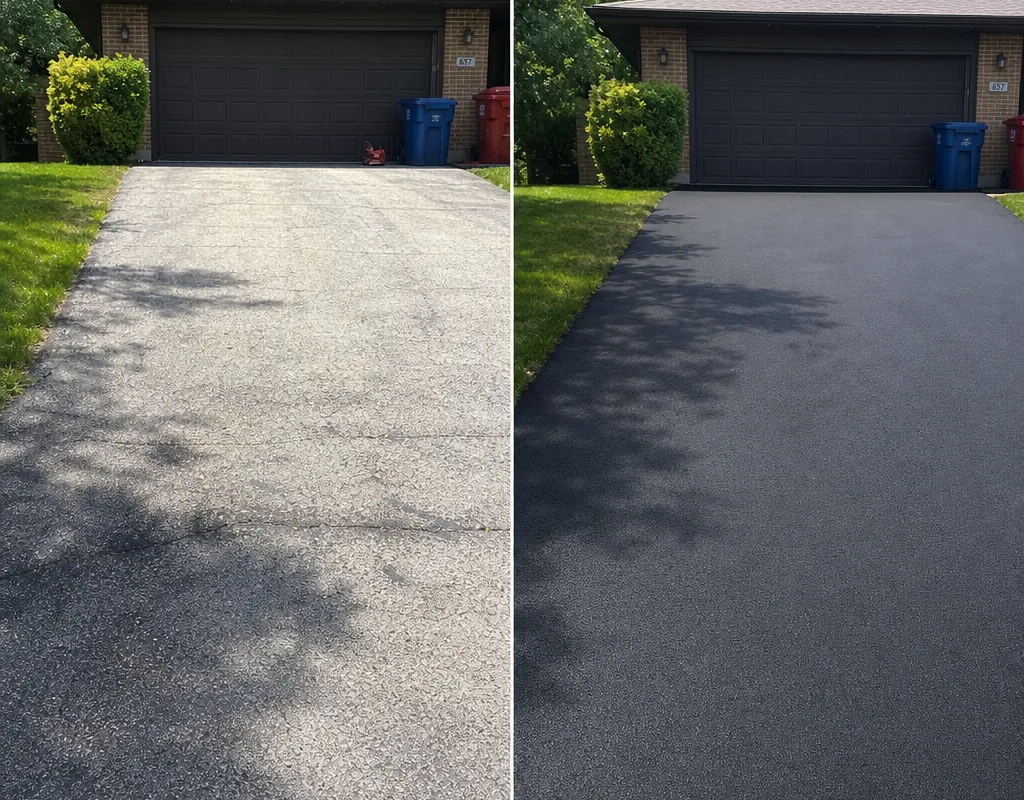
Prep that makes the sealer last
Sealcoating fails early when it goes over dust, sand, or oily spots. We clean the surface, address vegetation at edges, and make sure the driveway is ready to accept sealer.
Serving Salt Lake City, Utah & surrounding areas
Mon–Fri 8am–6pm · Sat 9am–2pm
Asphalt sealcoating · Sandy, Utah
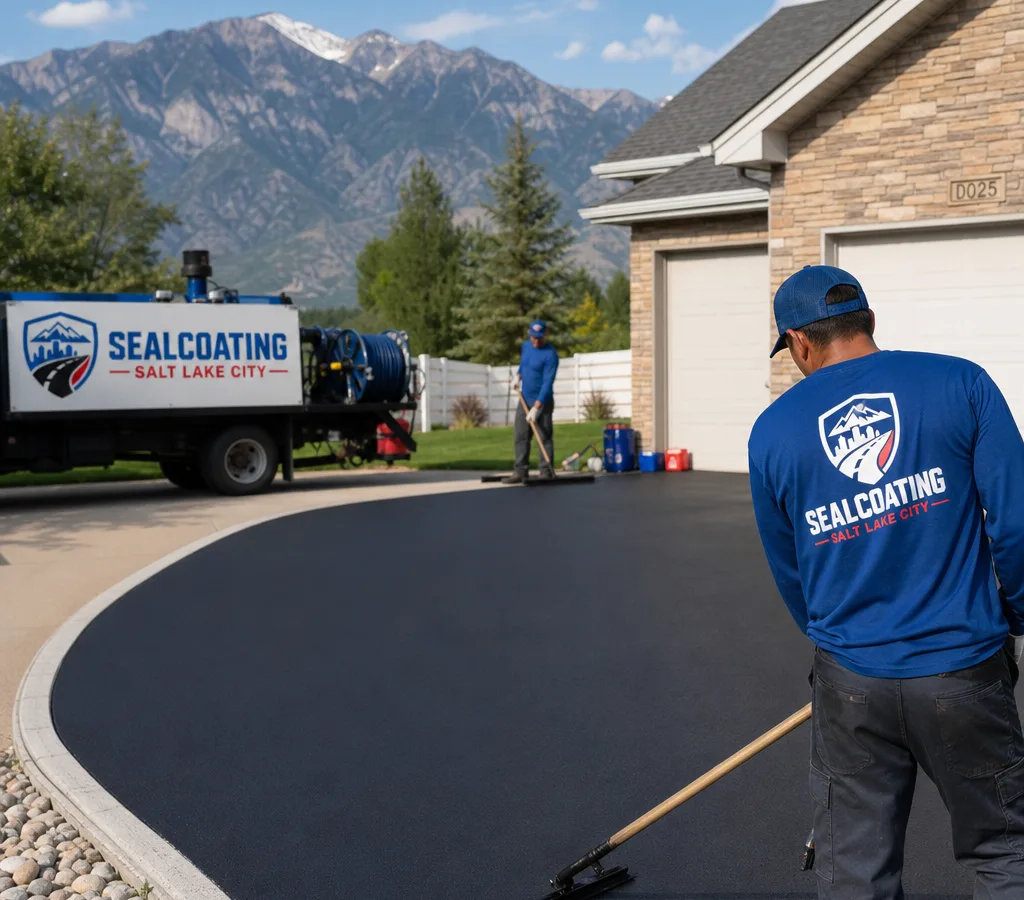
Protect your asphalt driveway from sun, water, and de-icing chemicals with clean prep, neat edges, and a finish that cures the right way for Utah's conditions.
Protection for Wasatch Front weather
Sealcoating Sandy UT is about one thing: keeping your asphalt in good shape longer. A quality sealer slows oxidation from high-elevation sun, reduces water intrusion that turns into freeze-thaw cracking, and gives the surface a darker, cleaner look that helps curb appeal.
Sandy sits at the base of the Wasatch Front, and driveways here see wide temperature swings, snowmelt runoff, and winter de-icers tracked onto the pavement. Those conditions punish unprotected asphalt, especially on sloped approaches or shaded areas that stay wet longer. Sealcoating is not a structural repair, but it is one of the most cost-effective ways to protect the investment after the asphalt is installed and any needed repairs are handled.
Sealcoating Salt Lake City is based in Salt Lake City and schedules work throughout the south valley, including Sandy. If you want a clear scope and a straightforward plan, start with a site visit so the prep and repair needs are identified before any sealer is applied.
Preparation before protection
Sealcoating fails early when it goes over dust, sand, or oily spots. We clean the surface, address vegetation at edges, and make sure the driveway is ready to accept sealer.
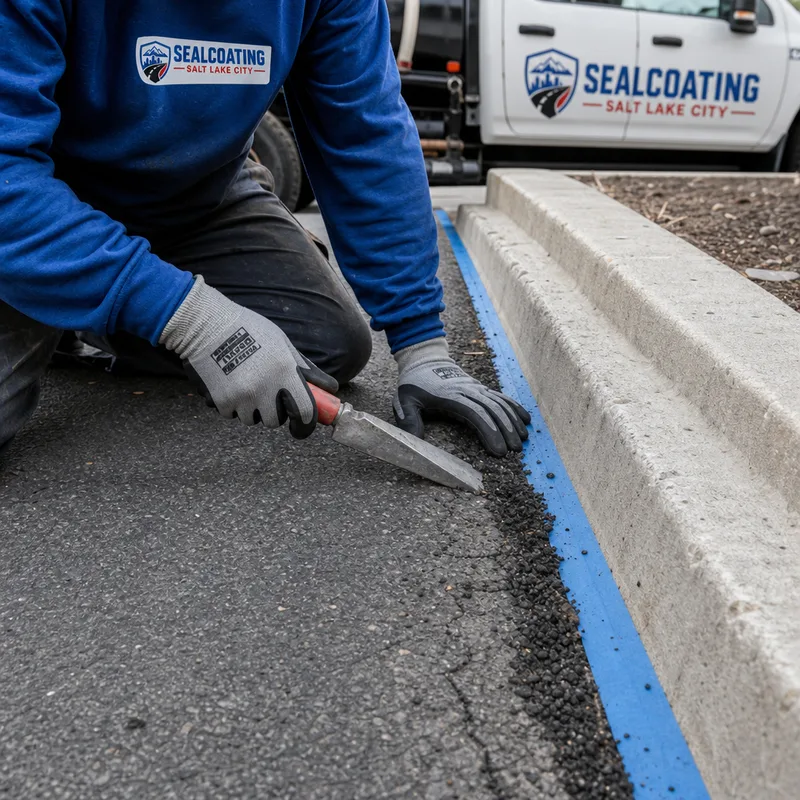
Open cracks and damaged areas are handled before sealcoating so the finish is not hiding problems. The right repair depends on crack width, movement, and surface condition.
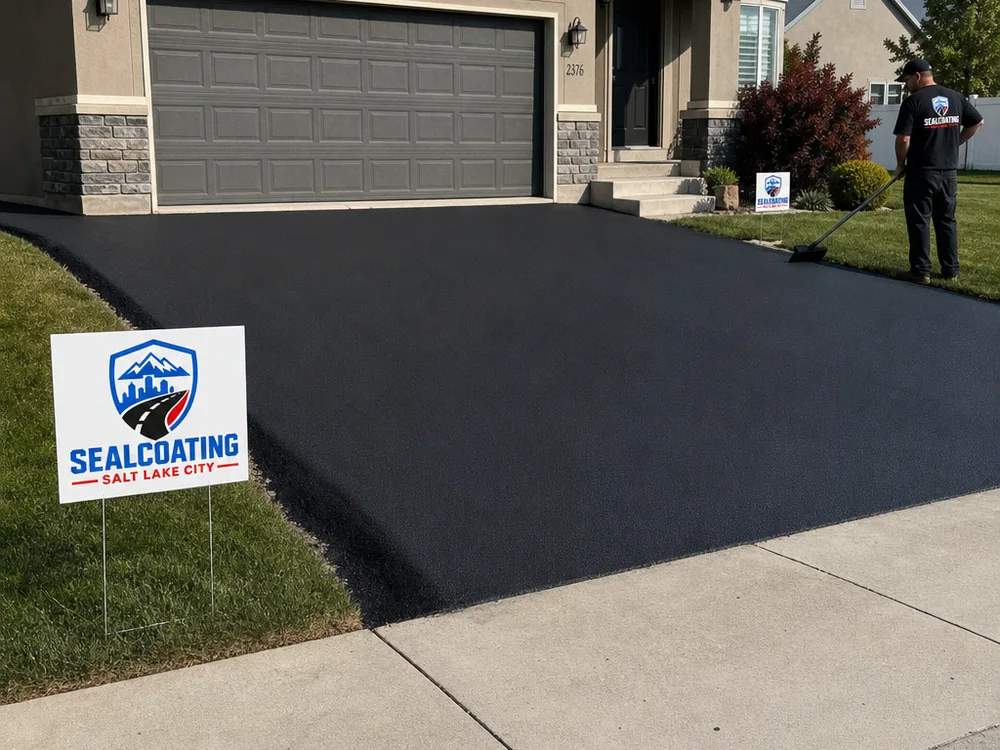
We protect adjacent concrete, pavers, and garage thresholds and keep the edge work tidy so the finished driveway looks intentional, not sprayed-on.
Sandy driveways often slope toward the street or garage. We pay attention to surface texture and curing conditions so the result looks good without becoming slick.
You get practical timing for foot traffic and vehicles based on conditions that day. Cure time changes with temperature, sun, and humidity.
Seal sound asphalt—not hidden failures
Sealcoating is best for asphalt that is structurally sound but starting to fade, dry out, or show light surface wear. If your driveway has hairline cracking, minor raveling, or a dull gray finish, driveway sealing in Sandy, Utah can slow the next round of damage.
There are also times we will recommend repair work first. If the asphalt is breaking apart, has widespread alligator cracking, or has areas that hold water because of settlement, sealer alone will not fix it. In those cases, the right move is targeted patching or other repairs, then sealcoating after the surface is stable.
Local note: many Sandy neighborhoods have a mix of older and newer asphalt, and some driveways see heavy sun exposure with little shade. UV oxidation is a major reason asphalt turns brittle, so sealing on a sensible cycle helps keep the binder from drying out as fast.
If you are comparing contractors, a good starting point is understanding what proper prep and application look like; our team follows the same condition-first approach across the valley.
Step 01
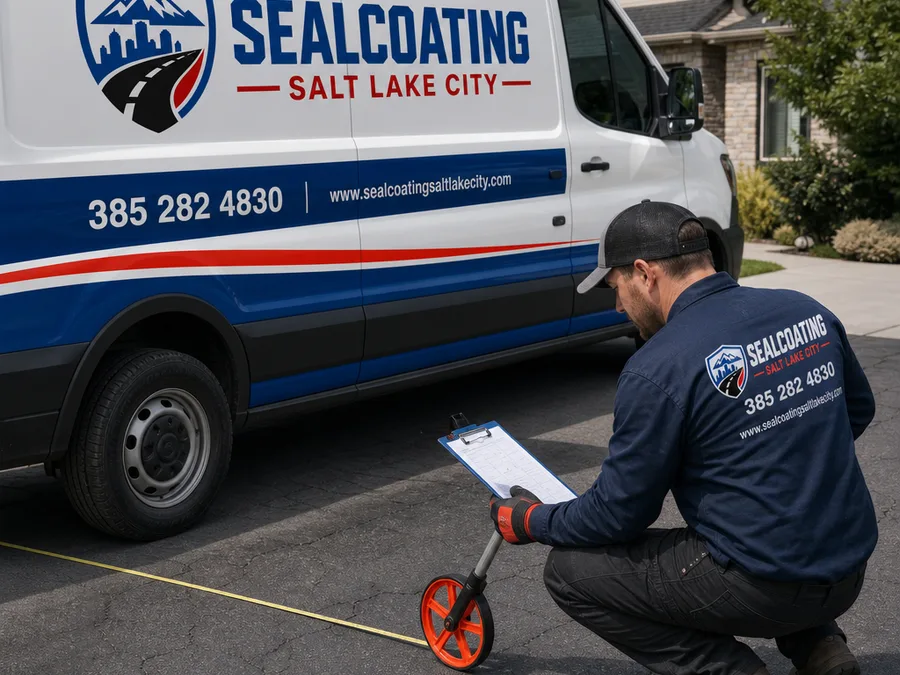
We look at asphalt condition, drainage, cracks, and transitions at the garage and sidewalk. You get a clear plan for cleaning, repairs, and sealcoat application.
Step 02
We remove loose debris and address growth at seams and borders so the sealer bonds to asphalt, not dirt and vegetation.
Step 03
Cracks are filled as appropriate and damaged areas are prepared for patching if needed. This step matters in Sandy where water infiltration and freeze-thaw cycles accelerate cracking.
Step 04
We apply sealer evenly and keep edges clean around concrete and landscaping. The goal is consistent coverage without tracking onto adjacent surfaces.
Step 05
We set expectations for when to walk on it and when to drive on it based on conditions. You also get guidance on avoiding tire marks and turning wheels while parked during early cure.
Site-specific pricing
Most residential sealcoating in Sandy typically ranges from about $250 to $750, with larger or badly worn surfaces often running $1,000 to $4,000+. A small, straightforward driveway with minimal cracking is usually on the lower end, while bigger surfaces, multiple parking pads, or significant crack filling and patch prep increase the total.
Price depends on square footage, surface condition, amount of crack work, how much cleaning is needed, edging and detailing time, and access for equipment. The exact cost is confirmed after an on-site look so the prep and repair scope matches what your asphalt actually needs.
Practical answers before sealing
Most homeowners reseal every 2 to 4 years, but the right timing depends on sun exposure, traffic, and how quickly the surface is oxidizing. A south-facing driveway that bakes in direct sun often needs attention sooner than a shaded driveway. If the surface looks dry and gray, or water stops beading on top, it is usually time to plan the next sealcoat.
Application is often completed the same day for most residential driveways, but curing takes longer than the work itself. In warm, dry conditions you may be able to walk on it later the same day and park the next day; cooler temperatures, shade, or higher humidity can extend cure time. We give timing guidance based on Sandy conditions on your scheduled day.
Yes, cracks should be addressed before sealcoating because sealer does not bridge moving gaps for long. The method depends on the crack size and movement: some cracks are candidates for crack filler, while others need patching or different repair steps first. During the site visit we flag which cracks are cosmetic and which ones indicate deeper problems.
No, sealcoating protects the surface but it does not correct settlement, birdbaths, or drainage patterns. If water regularly pools, that area usually needs a repair approach that changes the grade or replaces failing asphalt. After the surface is stable and drains properly, sealcoating helps protect the repaired area.
Clear vehicles from the driveway and move items stored along the edges so the entire surface can be cleaned and sealed. If sprinklers hit the driveway, plan to keep them off during application and cure time. We will also ask about any recent oil leaks so those areas can be prepped correctly before sealing.
Yes, as long as the work is detailed correctly with edge protection and careful cut-in. We take steps to avoid tracking sealer onto concrete and to keep transitions clean at the garage apron, sidewalks, and curb. If you have decorative concrete or pavers at the entry, point them out during the site visit so we can plan the protection and edging.
Plan the protection with confidence
Tell us what you are seeing on the driveway, and we will confirm whether sealcoating is the right next step, what prep is needed, and what schedule makes sense for curing and access.
Plan the protection with confidence
Tell us what you are seeing on the driveway, and we will confirm whether sealcoating is the right next step, what prep is needed, and what schedule makes sense for curing and access.
Request a quote
Send us the details and we will arrange a walkthrough, then put the scope and price in writing.